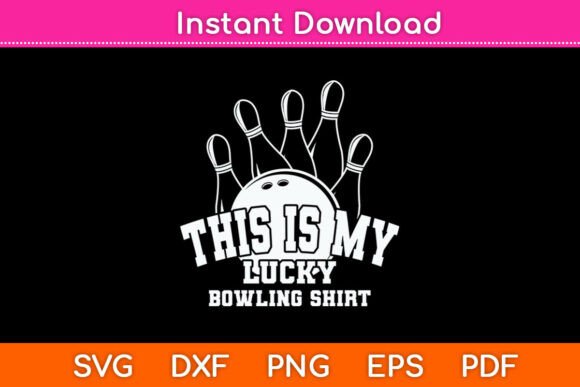
Review: This is My Lucky Bowling Team Vintage
As a designer who spends half my life staring at stitch simulations and the other half troubleshooting thread breaks, I approach every new machine embroidery design with a healthy dose of skepticism. We have all been there: you download a file that looks crisp on the screen, only to find it turns into a tangled mess of bird’s nest stitching on actual fabric. That is why I took a close, practical look at This is My Lucky Bowling Team Vintage before committing it to any client work or personal projects.
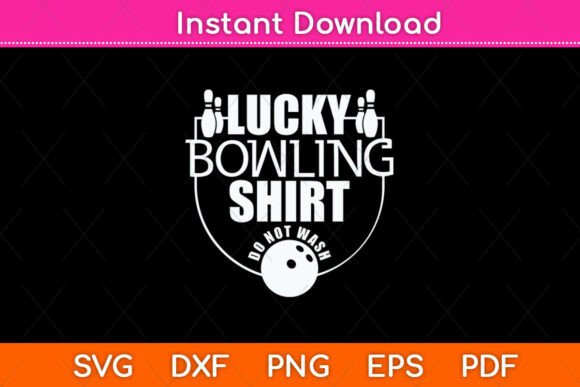
The first thing that strikes you about this piece is its attitude. It is not trying to be overly ornate or delicate. Instead, it leans heavily into a retro, humorous aesthetic that feels right at home in the current trend of nostalgic, laid-back apparel. The layout suggests a vintage bowling league shirt vibe, which immediately tells me where this belongs. It is not a subtle accent; it is a statement piece. For an embroidery professional, this means the design needs to hold its own visually without relying on excessive density to create impact.
Real-World Application: The Custom Sweatshirt Test
To truly evaluate an embroidery file, you have to imagine it on a tangible product. I visualized This is My Lucky Bowling Team Vintage on a heavyweight, heather-grey crewneck sweatshirt. This is a popular item for small shop products and Etsy sellers because it offers a large, stable canvas for stitching. The vintage theme pairs perfectly with the textured surface of fleece or French terry cloth.
In this scenario, the design acts as the centerpiece. Because the theme is "funny" and "retro," it appeals to a broad demographic, from college students looking for group gifts to adults planning a themed party. When I consider how customers react to such items, they are looking for personality. A generic logo feels corporate, but a design like this feels curated and handmade. It adds value to the finished product because it tells a story. If I were selling this as a personalized gift, I would likely add names below the main graphic, using a simple sans-serif font to keep the focus on the vintage illustration.
Stitching Considerations and Fabric Choice
While the visual appeal is strong, the technical execution requires attention. Since this is described as a design for cutting machines like Cricut and Silhouette, it is crucial to understand the difference between a vector cut file and an embroidery project. If you are converting this SVG into stitches, you must manually assign stitch types. For the bold outlines typical of vintage graphics, a satin stitch works well if the lines are narrow enough. However, if the shapes are wide, you will need to convert them to fill stitch patterns to prevent snagging and ensure durability.
One major concern with vintage-style graphics is detail level. If the original SVG has tiny, intricate lines, they may not translate well to thread. Thread has thickness; it cannot replicate the precision of a laser cutter. I recommend simplifying any overly complex elements before digitizing. Check your stitch density carefully. Too dense, and you risk puckering the fabric, especially on lighter materials like cotton t-shirts. Too sparse, and the backing fabric might show through, ruining the professional look.
Fabric texture plays a huge role here. On a smooth polo shirt, the design will look sharp and defined. On a textured towel or a rough canvas tote bag design, the stitches may blend slightly with the weave. This is not necessarily a bad thing—it can enhance the vintage feel—but it requires testing. Always use a appropriate stabilizer. For stretchy fabrics like sweatshirts, a cut-away stabilizer is non-negotiable to maintain shape after washing. For woven fabrics like aprons or pillow covers, a tear-away might suffice, but I prefer cut-away for longevity in commercial items.
Navigating Limitations and Best Uses
There are specific scenarios where This is My Lucky Bowling Team Vintage should be used with caution. Curved surfaces, such as caps or hats, present a challenge. If the design is too wide, it will distort around the curve of the crown. In such cases, consider resizing the graphic or breaking it into smaller components. Additionally, dark fabrics require careful planning of thread colors. If the design relies on light colors against a black background, you may need an underlay stitch or a white base layer to ensure vibrancy.
Small hoop sizes are another limitation. If you are working with a 4x4 inch hoop, you might need to crop or simplify the design significantly. Always check the dimensions of your hoop size against the scaled design before hitting start. For baby embroidery or delicate items, ensure that no small, detachable parts are created by loose threads, and avoid dense stitching that could make the garment stiff and uncomfortable against sensitive skin.
Commercial Viability and Brand Consistency
For Etsy sellers and craft business owners, this design fits neatly into the "novelty" and "gift" categories. It is ideal for holiday gifts, bachelor parties, or family reunions. The humor element drives engagement on social media, making it easier to market in printable mockup previews. However, professionalism is key. Ensure that your stitching is clean, with no jumps or loose ends. A sloppy stitch job can undermine the charm of even the best design.
It is also vital to verify licensing. The product description notes it is an instant download for cutting machines. If you plan to use this for commercial embroidery, you must confirm whether the creator allows the sale of finished physical items. Do not assume that because it is an SVG, it is free for commercial embroidery use. Clarify this with the seller to protect your small shop product line.
Final Designer Notes
Before launching this into production, follow these steps:
- Test on scrap fabric: Never stitch directly on the final garment. Use a similar material to check tension and density.
- Check contrast: View your design in black and white to ensure the shapes are distinct and readable without color reliance.
- Inspect details: Zoom in on the digitized version to catch any potential thread breaks or overlapping stitches.
- Confirm compatibility: Since this is originally a Graphics file for cutters, ensure you have properly digitized it for your specific embroidery machine format.
In conclusion, This is My Lucky Bowling Team Vintage is a promising asset for designers who understand how to bridge the gap between digital graphics and tactile embroidery. It offers a fun, retro vibe that resonates with modern buyers, but it demands respect for technical limitations. With proper digitizing, stabilizer choice, and fabric selection, it can become a standout piece in your design assets library, elevating everything from a simple embroidered patch to a premium custom apparel item.