Reviewing Breast Cancer in My Cancer Free Era
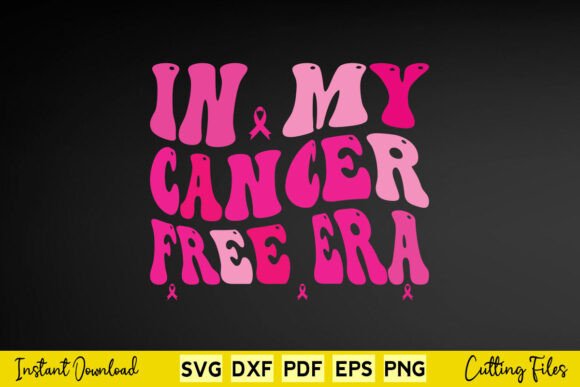
As a designer who spends half my life staring at digitized files and the other half watching needles punch through fabric, I have learned that not every graphic translates well to thread. When I first encountered Breast Cancer in My Cancer Free Era, my initial reaction was one of cautious optimism. The phrase itself carries weight—it is celebratory, resilient, and deeply personal. But from a technical standpoint, the question remains: does this design hold up under the pressure of a high-speed embroidery machine, or is it better suited for print?
The product description labels this as an SVG intended for t-shirts, mugs, and stickers. However, for those of us in the Crafts and Graphics space who specialize in textile decoration, we know that a vector file is just the starting point. To use this effectively in a professional setting, we must evaluate its potential as a machine embroidery design. Let’s break down how this concept performs when moved from the screen to the hoop.
The Visual Mood and Layout Assessment
The first impression of Breast Cancer in My Cancer Free Era is one of bold declaration. In the context of embroidery, mood is dictated by stitch type and density. If this design relies heavily on intricate, thin lines, it may struggle to convey its message on textured fabrics. A successful embroidery project requires a balance between negative space and filled areas.
When I visualize this layout on a garment, I look for clarity. Does the typography allow for clean satin stitch borders, or will it require a dense fill stitch that could make the fabric stiff? For a theme centered on survival and freedom, the design should feel open and breathable, not heavy. If the original SVG features complex gradients or tiny details, these are red flags for embroidery. Thread has physical thickness; it cannot replicate the pixel-perfect precision of a digital print. Therefore, simplifying the design for stitch clarity is often necessary before loading it into your software.
Real-World Application: The Custom Sweatshirt Scenario
Let’s consider a realistic scenario. A client approaches you, an Etsy seller or small shop owner, requesting a personalized gift for a friend who has just completed treatment. They want a sweatshirt embroidery piece that is stylish yet meaningful. This is where Breast Cancer in My Cancer Free Era shines—if executed correctly.
Placing this design on the left chest of a high-quality cotton blend sweatshirt creates a subtle, powerful statement. Unlike a large back print, a chest placement feels intimate and wearable daily. However, you must consider the fabric texture. Fleece and French terry cloth have pile. If the design includes fine running stitch details or small text, they may get lost in the fuzz. In this case, I would recommend using a heavier weight thread or adjusting the stitch density to ensure the letters pop against the background. This transforms a simple handmade product into a cherished keepsake.
Versatility Across Product Lines
Beyond apparel, this design has potential in various embroidery project categories. Consider a tote bag design made from canvas. Canvas is stable and handles density well, making it an ideal candidate for larger versions of this graphic. It could also work as an embroidered patch, which offers the advantage of being removable and washable separately from the garment. This is crucial for items that require frequent laundering, such as gym bags or daily-use caps.
For baby embroidery or nursery decor, caution is advised. While the sentiment is positive, the aesthetic might be too mature for infant items unless softened with pastel thread colors and playful fonts. Always match the tone of the design to the end user. A personalized gift for a survivor should feel empowering, not clinical.
Technical Challenges and Material Constraints
Not every surface is friendly to embroidery. If you plan to use Breast Cancer in My Cancer Free Era on curved surfaces like caps, you must account for distortion. Caps have limited hoop space and a curved geometry that can warp text. Ensure the design is narrow enough to fit within a standard cap frame without touching the seams. Additionally, avoid dense fills on the front panel of a cap, as this can cause puckering.
Dark fabrics present another challenge. If the design relies on light-colored threads, you may need to use an underlay stitch or a backing material to prevent the dark fabric from showing through the stitches. This is particularly important for commercial embroidery where consistency is key. Always test your embroidery file on scrap fabric of the same weight and color before committing to the final product. This step saves time, thread, and customer trust.
Stabilizer and Hoop Selection
The choice of stabilizer can make or break this design. For stretchy fabrics like jersey t-shirts, a cut-away stabilizer is non-negotiable to prevent distortion after washing. For woven fabrics like aprons or pillow covers, a tear-away might suffice if the design is not overly dense. Always confirm the recommended hoop size for your specific machine. If the design is larger than your standard hoop, you will need to use a multi-positioning technique, which requires precise alignment to avoid visible jumps in the stitching.
Enhancing Brand Value and Customer Trust
For creative entrepreneurs and craft business owners, the quality of your finished product reflects your brand. Using a well-digitized version of Breast Cancer in My Cancer Free Era demonstrates professionalism. Customers can tell the difference between a sloppy stitch-out and a crisp, clean design. High-quality embroidery increases the perceived value of your small shop product, allowing you to price your items competitively.
Moreover, this design taps into a community of survivors and supporters. Handling this theme with respect and technical excellence builds emotional connection and buyer engagement. When customers see a beautifully stitched item, they are more likely to share photos on social media, providing free marketing for your design assets.
Practical Designer Notes for Implementation
Before you list this as a digital embroidery file or sell finished goods, take these steps:
- Test on Scrap Fabric: Always run a test stitch-out on the actual material you intend to use. Check for thread breaks, nesting, or puckering.
- Check Thread Contrast: View your design in black and white mockups to ensure the shapes are distinct without color reliance.
- Review Stitch Density: High density can cause fabric stiffness. Adjust settings to maintain softness, especially for wearables.
- Confirm Licensing: Since the source is described as an SVG for printing, verify if you have the rights to convert and sell it as an embroidered item. Many SVG licenses do not cover commercial embroidery use.
- Inspect Small Details: Zoom in on your digitizing software. Any element smaller than 2mm may not stitch out cleanly and should be removed or enlarged.
In conclusion, Breast Cancer in My Cancer Free Era is a powerful concept that, when treated with technical care, can result in stunning finished product outcomes. Whether you are creating a holiday embroidery gift or expanding your custom apparel line, remember that the medium dictates the method. Respect the thread, understand the fabric, and let the design speak clearly through every stitch.