Reviewing It Takes a Big Heart to Help Shape
As an embroidery designer who has spent years digitizing files and stitching out thousands of samples, I approach every new machine embroidery design with a critical eye. It is not enough for a graphic to look good on a screen; it must survive the needle, the thread tension, and the wash cycle. Recently, I evaluated It Takes a Big Heart to Help Shape, a digital asset marketed toward educators and gift-makers. While the product description labels it as an SVG for printing on items like t-shirts and mugs, my focus was strictly on how this artwork translates into thread for real-world embroidery projects.
First Impressions and Visual Mood
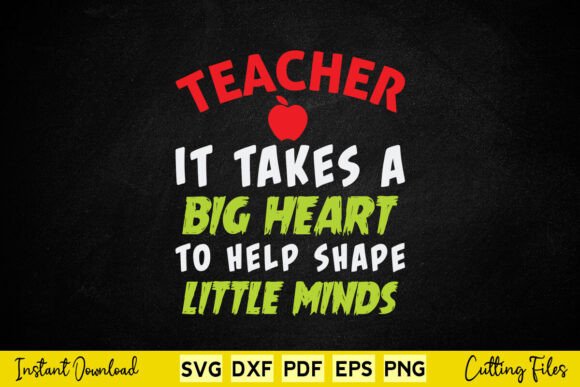
The phrase "It takes a big heart to help shape little minds" carries significant emotional weight. Visually, the design relies on a balance between typographic clarity and symbolic imagery. When I first loaded the file into my editing software, I looked for clean vector paths that would convert well into stitch data. The layout feels warm and inviting, suitable for the Crafts category where sentiment drives sales. However, from a technical standpoint, the complexity of the lettering and any accompanying graphics determines whether this will be a quick run or a nightmare of thread breaks.
The mood is undeniably professional yet tender. This is not a playful, cartoonish design but rather one that respects the profession of teaching. For an Etsy seller or a small shop product creator, this distinction matters. Customers buying personalized gifts for teachers are looking for dignity and appreciation, not just cuteness. The visual personality of It Takes a Big Heart to Help Shape aligns well with boutique branding, offering a level of sophistication that elevates a simple tote bag or apron into a cherished keepsake.
Real-World Application: The Teacher Appreciation Tote
To test the viability of this design, I imagined a common scenario: a custom order for a canvas tote bag intended as a end-of-year gift. Canvas is a sturdy fabric, but it has a distinct texture that can interfere with fine details. If I were to digitize this SVG into an embroidery file, I would need to consider the stitch density carefully. Too dense, and the fabric puckers; too light, and the background shows through, ruining the legibility of the message.
In this context, It Takes a Big Heart to Help Shape performs best when scaled appropriately. For a tote bag, a larger hoop size allows the text to breathe. I would recommend using a combination of fill stitch for any solid shapes, such as a heart icon if included in the specific variation, and satin stitch for smaller textual elements. However, satin stitches have a width limit. If the design includes very thin lines or tiny serifs, they may not stitch out cleanly without manual adjustment. This is where the role of the designer becomes crucial—transforming a static Graphics file into a dynamic, stitch-ready asset.
Fabric Considerations and Stitching Challenges
Not all substrates are created equal. While the product description mentions printing on sweaters and hoodies, embroidery on knit fabrics requires different handling than woven cotton. If you plan to use It Takes a Big Heart to Help Shape on a sweatshirt embroidery project, you must account for the stretch. A heavy stabilizer is non-negotiable here. Without proper support, the design will distort after the first wash, turning a professional handmade product into a disappointing mess.
Dark fabrics present another challenge. If you are stitching this design onto a navy or black teacher’s hoodie, your thread colors must have high contrast. Light creams, golds, or bright whites work well, but you must ensure the underlying fabric does not peek through. In some cases, an underlay stitch or even an applique design technique might be necessary to create a solid base before the top stitching begins. This adds time and cost but significantly improves the finished look.
Curved surfaces, such as caps or baby hats, require extra caution. The phrase is relatively long. Fitting it onto a small cap front panel might require reducing the font size to a point where legibility suffers. I would advise against using this specific design on small hoop size projects unless you simplify the text or stack the lines creatively. For baby embroidery, softness is key, so using a lighter thread weight and ensuring no scratchy backing remains against the skin is essential for customer satisfaction.
Commercial Viability and Brand Consistency
For commercial embroidery professionals, consistency is currency. If you are selling this as part of a collection, you need to know that It Takes a Big Heart to Help Shape will look uniform across different items. Does it look as good on a tote bag design as it does on a pillow cover? Testing is vital. I recommend creating printable mockup images to show clients how the design scales, but always back this up with physical samples.
The value of this design lies in its versatility. It fits seamlessly into holiday embroidery collections, back-to-school promotions, and year-round teacher appreciation gifts. By offering it on various items like aprons, tea towels, or embroidered patch styles, you increase the perceived value of your craft business. However, remember that this is sold as a digital product for printing. If you intend to sell the digital embroidery file itself, you must verify the licensing terms. Most SVGs are not automatically licensed for redistribution as stitch files. Always confirm whether you are selling the finished physical item or the digital asset.
Practical Designer Notes for Execution
Before committing to a full production run, follow these steps to ensure quality:
- Test on scrap fabric: Always stitch out a sample on the exact material you plan to use for the final product. This reveals issues with tension and registration.
- Check thread contrast: View your design in black and white to ensure the shapes remain distinct without color reliance.
- Review stitch density: If digitizing from the SVG, adjust the density to match the fabric weight. Heavy denim needs less density than lightweight cotton.
- Inspect small details: Zoom in on the smallest letters. If they are below 4mm, consider removing serifs or simplifying the font to prevent thread bunching.
- Use proper stabilizer: Match the stabilizer to the fabric. Cut-away for knits, tear-away for stable wovens.
- Confirm licensing: Ensure you have the right to use the design for commercial sales if you are an Etsy seller or boutique owner.
In conclusion, It Takes a Big Heart to Help Shape is a strong candidate for meaningful, sentiment-driven projects. Its success depends not on the file itself, but on the skill of the maker who translates it into thread. With careful attention to fabric choice, stabilizer, and stitch technique, this design can become a standout piece in any custom apparel or home decor lineup. Treat it with the respect it deserves, and it will reward you with loyal customers and beautiful finished products.