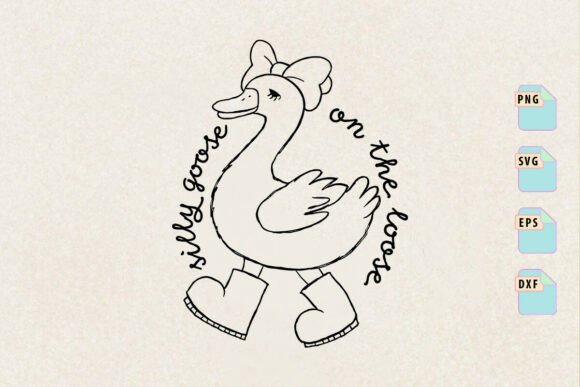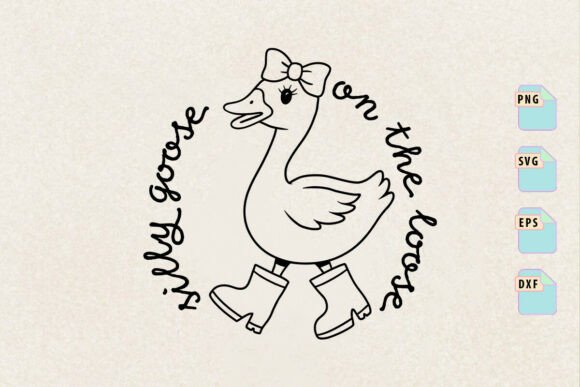
Silly Goose on the Loose Silhouette: A Designer’s Review
As an embroidery designer who has spent years translating digital concepts into thread, I have learned that not every graphic translates well to fabric. Some designs look crisp on a screen but turn into a tangled mess under the needle. When I first encountered Silly Goose on the Loose Silhouette, my immediate reaction was one of cautious optimism. The concept is playful, tapping into the current trend of whimsical, meme-inspired humor that performs exceptionally well in the handmade market. However, the real test is always in the stitching.
This review breaks down how this specific design holds up when moved from a digital asset to a tangible, stitched product. Whether you are an Etsy seller looking for your next best-seller or a hobbyist making gifts for friends, understanding the practical implications of this silhouette is crucial before you hit the start button on your machine.
First Impressions and Visual Personality
The mood of Silly Goose on the Loose Silhouette is undeniably lighthearted. It captures a sense of chaotic fun that resonates with modern consumers who appreciate irony and humor in their apparel. Visually, the silhouette format offers a clean, bold outline that is generally easier to manage than highly detailed illustrations. For embroidery, this is a significant advantage. Complex gradients and tiny details often get lost in thread, but a strong silhouette maintains its integrity even at smaller sizes.
The layout suggests versatility. It does not rely on intricate internal shading, which means it can work effectively as a fill stitch area or potentially as an applique design if you want to introduce texture contrast. The visual personality is approachable, making it suitable for a wide demographic, from toddlers to adults who enjoy quirky fashion statements.
Real-World Application: The Tote Bag Test
To evaluate this design properly, I simulated a common commercial scenario: creating a custom embroidered tote bag for a local boutique. Tote bags are popular because they serve as walking advertisements for small businesses. I chose a medium-weight canvas fabric, which is standard for this type of handmade product.
Placing the goose silhouette on the front panel required careful consideration of scale. Because the design is a silhouette, it relies heavily on the contrast between the thread color and the fabric. I opted for a bright white thread against a navy blue canvas. The result was striking. The bold lines of the goose stood out clearly, and the "loose" nature of the pose added dynamic movement to the otherwise static bag. Customers are drawn to items that feel unique, and this design delivers that custom appeal without requiring hours of complex digitizing adjustments.
Beyond tote bags, this design shines on sweatshirt embroidery. The soft texture of fleece or cotton blend sweatshirts provides a forgiving background for the stitches. The playful theme aligns perfectly with casual wear, making it an ideal choice for custom apparel lines targeting younger demographics or gift markets.
Technical Considerations for Stitching
While the design is visually appealing, there are technical aspects that every embroiderer must address. Since the source description mentions this is available as a PNG and SVG, primarily for crafting and vinyl cutting, it is vital to note that this may not be a native machine embroidery design file like PES or DST. If you are converting this SVG into an embroidery file using software, you must pay close attention to stitch density.
A solid silhouette filled entirely with satin stitches can become too dense, leading to puckering or needle breaks. I recommend using a combination of running stitch borders and a lighter fill pattern. If you are using this as an applique, ensure your placement stitch is precise, as the silhouette shape leaves little room for error in alignment.
Another critical factor is the hoop size. Ensure the design fits comfortably within your hoop with adequate margin for stabilization. For smaller items like baby embroidery projects or caps, you may need to resize the graphic. Be cautious when shrinking silhouettes; if the details become too small, the threads may merge, losing the definition of the goose’s features.
Fabric and Stabilizer Choices
The success of any embroidery project depends heavily on the foundation. For stretchy fabrics like t-shirts, a cut-away stabilizer is non-negotiable to prevent distortion. For woven fabrics like aprons or pillow covers, a tear-away stabilizer usually suffices. Always test the design on scrap fabric first. This allows you to check thread tension and color contrast without risking your final product.
Dark fabrics present a challenge for light-colored threads. If you are stitching a light goose on black fabric, consider using a underlay stitch to create a base that prevents the fabric color from peeking through. This step enhances the professionalism of the finished product and ensures the design remains vibrant after washing.
Commercial Viability and Brand Consistency
For Etsy sellers and small shop owners, consistency is key to building brand trust. Silly Goose on the Loose Silhouette offers a distinct aesthetic that can help define a brand’s voice as fun and approachable. It works well for seasonal promotions, such as holiday embroidery gifts or back-to-school merchandise. The meme culture reference adds a layer of relatability that can drive engagement on social media platforms.
However, always verify the licensing terms before selling. The description indicates it is a digital download for crafting, but commercial use rights for physical goods versus digital resale can vary. Confirm whether you can sell the embroidered patch or garment, or if the license restricts you to personal use only. Protecting your business from copyright issues is just as important as the quality of your stitching.
Final Verdict
Silly Goose on the Loose Silhouette is a strong contender for crafters looking to add humor and personality to their offerings. Its simplicity makes it accessible for beginners, while its bold style allows experienced designers to experiment with thread textures and fabric combinations. By paying attention to stitch density, stabilizer choice, and proper scaling, you can transform this digital graphic into a high-quality commercial embroidery asset.
Whether you are creating a personalized gift or expanding your craft business inventory, this design offers a balanced mix of charm and practicality. Just remember to treat it as a starting point for your creativity, adjusting technical settings to match your specific machine and materials. With the right approach, this silly goose can become a serious profit driver for your handmade enterprise.